Reportage, Ukraine, 2025.
>>portfolio<<
Deminer of the organization Halo Trust during the manual mine clearance activity in a field in the Mikolaiv countryside in southern Ukraine on October 22, 2025. This field was since March 2022, for 8 months, the base of the Russian army to try to enter the city of Mykolaiv. (Exact location not mentioned for security reasons).
Deminers in a mined field in the countryside of Mykolaiv in the south of Ukraine on October 22, 2025.
Julia 35 years old member of a non-technical survey team from the NGO Halo Trust in the region of Mykolaiv in the south of Ukraine on October 23, 2025. Single mother with two children aged 9 and 11 must manage the danger of her work and the mental burden of a single-parent household. In 2025, a directive from the Ukrainian Ministry of Economy asked demining organizations to hire more women.
Mechanical demining team of the NGO Halo trust operating through the use of a DEREE machine to sort the land and detect unexploded ordnance in the Mikolaiv countryside in the south of Ukraine on October 22, 2025.
A minesweeper from the NGO HALO Trust remotely manages a DEREE device via Google View in Mikolaiv in the south of Ukraine on October 22, 2025. The Ministry of the Economy for the first time authorized the use of demining machines with operators on board last months making the mechanical demining technique accessible to several actors active in the field.
Deminer of the UDA - Association of client deminers - under preparation for a demining operation with a protective vest given by the NGO MAG in the region of Mykolaiv in the south of Ukraine on October 27, 2025. More than 100 organizations active in demining operations between NGOs and private and commercial actors are currently operational in Ukraine.
Milena, 45 years old, deminer of the UDA - Association of Ukrainian deminers - in the countryside of Mykolaiv in the south of Ukraine on October 27, 2025. Her husband was part of the AZOV brigade fallen during the iconic Battle of Mariupol. For her, participating in demining operations is contributing to the difficult period that Ukraine is experiencing.
Field where the NGO Halo Trust is carrying out a manual mine clearance in the Mikolaiv countryside in the south of Ukraine on October 22, 2025. The fields in the Mikolaïv region are classified as granaries of Europe and are still 100% ineffective due to the presence of mines and unexploded ordnances dating back to the three-and-a-half-year clashes.
Yehvenhii (name modified for security reasons) deminer of the UDA - Ukranian Deminers Association - in the countryside of Mykolaiv in the south of Ukraine on October 27, 2025. After 5 years of military service he decided to become a deminer to be closer to his wife and 7-year-old son. His desire is that everything ends quickly and that all the people on the front can breathe and return to their families.
In Ukrainian schools students and teachers observe a daily minute of silence to honor those who have fallen in the war, a moment of collective reflection that underscores the human cost of the conflict and strengthens a shared sense of solidarity.
Details in a class in a school in a village in Mykolaiv region in the south of Ukraine on October 23, 2026. HALO Trust NGO organises information sessions in schools in order to teach children how to recognise and avoid dangerous mines and unexploded ordnance, helping to reduce the risk of injuries and deaths from these hidden war hazards.
Julya, 32, a primary school teacher in a school in the region of Mykolaiv on Octobre 23, 2026. She has taught at the same school for ten years. She notes that over the past five years, the presence of landmines and the constant danger children face outside their homes—combined with the war and invasion—have intensified a process of psychological withdrawal that first emerged during the COVID-19 pandemic.
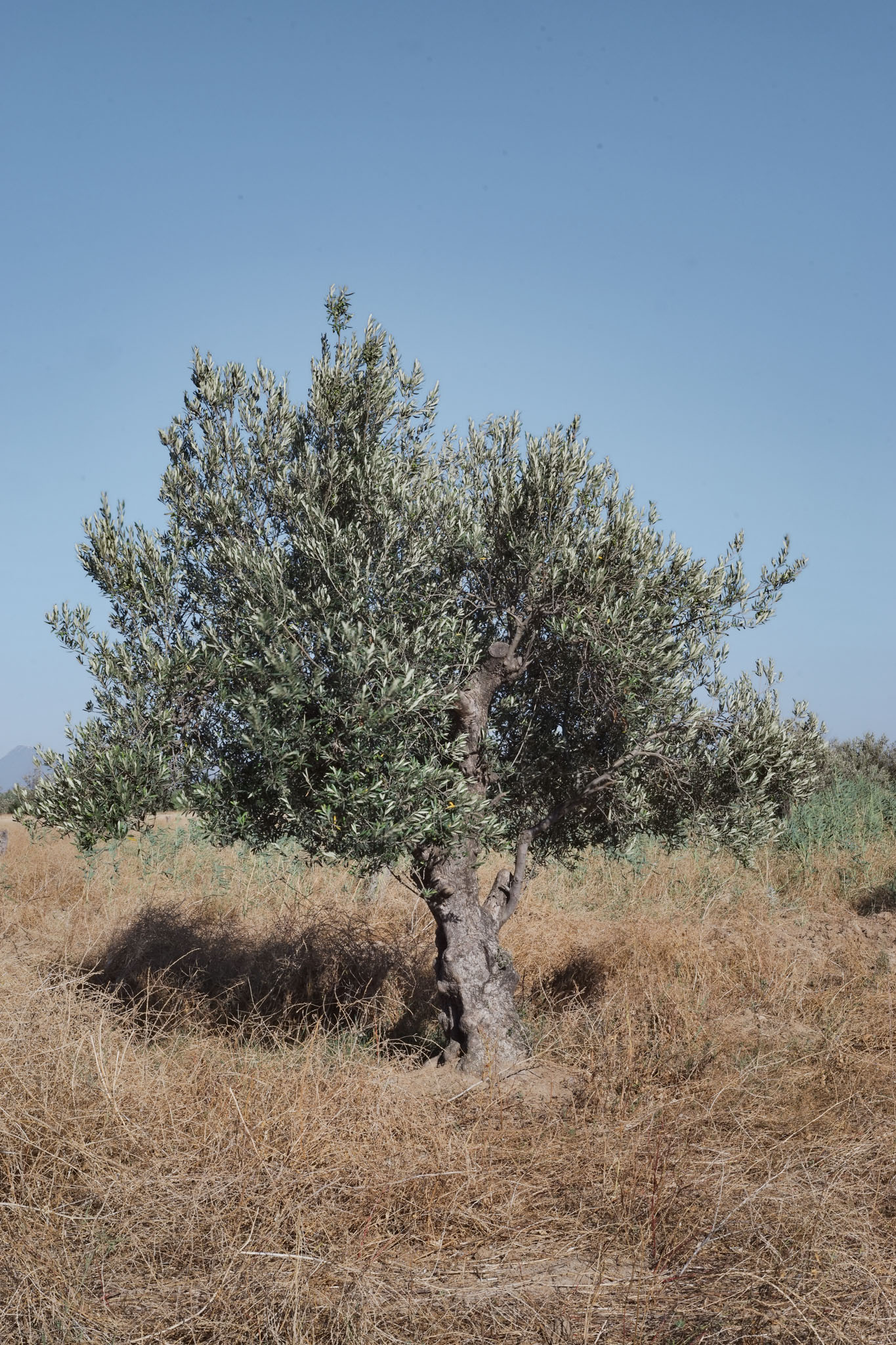
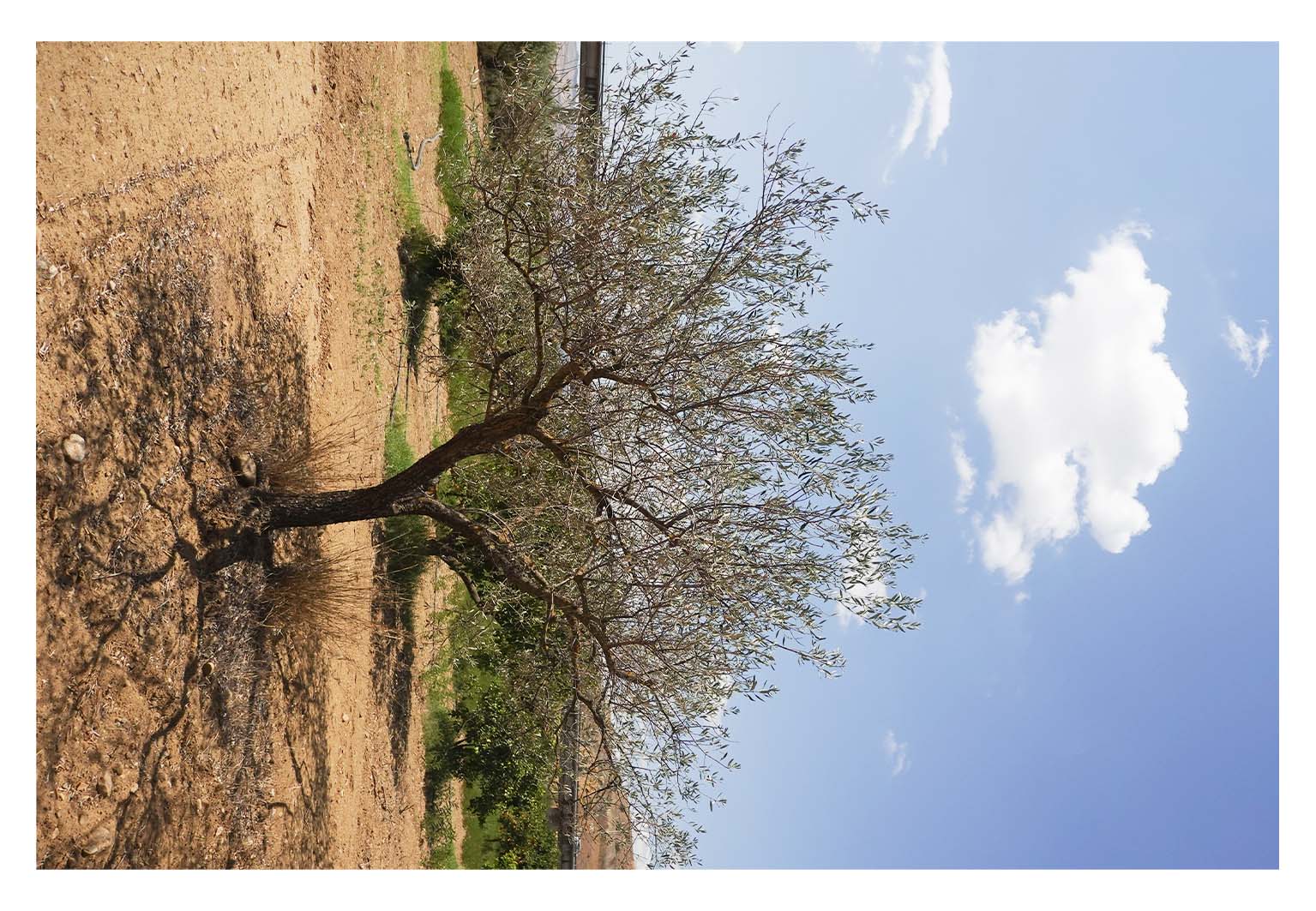
Sergii, agronomist of the NGO Halo Trust, checks the status of an oak tree in the countryside of Mykolaiv in the south of Ukraine on October 25, 2025. The NGO Halo Trust is engaged in projects to restore the natural ecosystem after demining, such as the construction of a forest line used in the region to cut off the cold wind and protect the grains planted during the autumn.
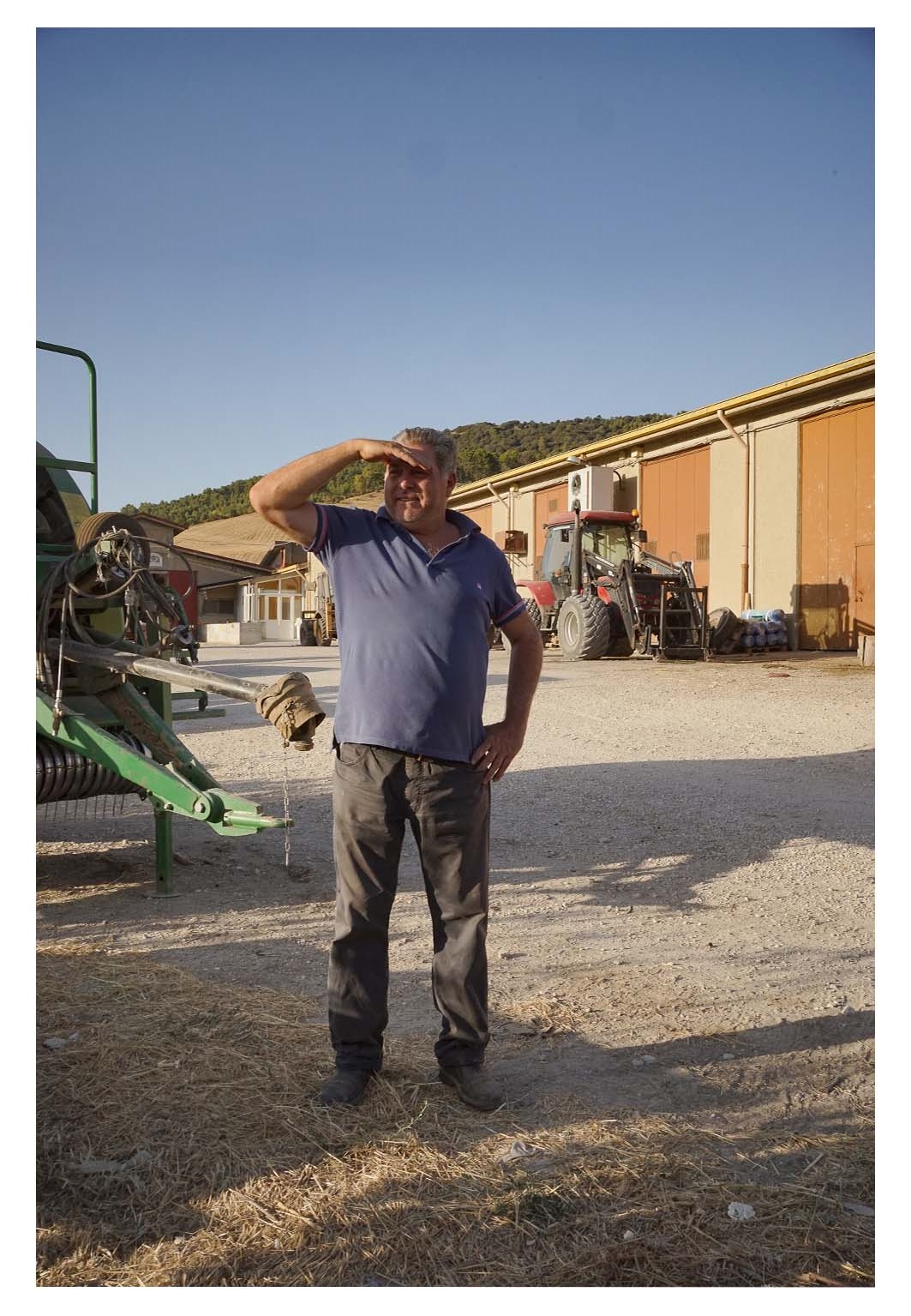
Mykhailo, a local farmer and entrepreneur, in what was used for seed storage in the Mykolaiv countryside in the south of Ukraine on October 26, 2025. In 2022, the depot was hit by a Russian drone that started a fire because of which Mykhailo lost all the grain crop of the year. Today, he is still paying the financial price of the accident.
Remains of an Uragan-type missile not yet detonated or carried by the SESU - Ukrainian Emergency and Security Service - in the Mykolaiv region in the south of Ukraine on October 27, 2025. Until 2025, the SESU was the only organization authorized to store mines and explosive remnants found by other operators in Ukraine.
Sign of the company BAYER in the Mykolaiv campaign in the south of Ukraine on October 27, 2025. Since 2022, Bayer has been strengthening its presence in Ukraine by investing in agricultural production and food security. 85% of the territory of the Mykolaiv campaign is used for the production of monocultures, mainly rapeseed, corn and wheat.
Machine type BOZENA of Slovak production used for remotely controlled mechanical mine clearance operations in the countryside of Kharkiv in the north-east of Ukraine on November 6, 2025.. Another heavy demining machine called GART 5100 is produced in the Kharkiv region. In 2023, about 70% of the mined territory was mechanically cleared.
Maxime 36 years old mechanic of the ATOM team charitable foundation active in demining operations in the countryside of Kharkiv in the north-east of Ukraine on November 6, 2025. Maxime loses his foot following the explosion of an anti-personnel mine in 2023, during a military operation. Today, he is part of the national football team and participates in the national tournament for veteran amputees.
Remains of a Russian missile shot down by the Ukrainian air defense in September 2025 in the Drevliansky reserve in northern Ukraine on November 13, 2025. Part of the Drevliansky Nature Reserve is still mined as the priority for demining operations is agricultural land.
Ivan, 25 years old, ranger of the Drevliansky reserve in northern Ukraine on November 13, 2025. In their explorations, they often encounter unexploded ordnance or anti-tank and anti-person mines. Part of the Drevliansky Nature Reserve is still mined as the priority for demining operations is agricultural land.
Ukrainian flag in commemoration of the offensive of the 7th and the retreat of the Russian army in front of a field still mined in the region of Mykoliav in the south of Ukraine on October 22, 2025. Three years later, the consequences of the war still condition the territories and the economy of the countryside of Mykolaiv despite the 26,000 hectares of land have been cleared, with more than 70,000 explosive devices neutralized.
![]()
Dmytro Slepkán, ancien sapeur du service d’urgence ukrainien, a perdu complètement la vue en 2019 lors d’une opération de déminage dans le district de Bakhmout, lorsqu’un engin explosif improvisé a détoné au moment où l’équipe tentait de le neutraliser. L’explosion a coûté la vie à un collègue et en a blessé d’autres. Après l’accident, il a subi de graves lésions oculaires et, malgré des soins en Ukraine et à l’étranger, sa vue n’est pas revenue. Il a traversé un long processus de réadaptation physique et psychologique, apprenant à vivre de manière autonome et à accepter sa nouvelle condition. Aujourd’hui, il travaille comme coordinateur humanitaire au sein de l’Association des sapeurs ukrainiens et est également actif au sein de l’Association ukrainienne des démineurs (UDA), où il aide les victimes de mines et mène des actions de sensibilisation aux dangers des engins non explosés. Dans son témoignage, il se souvient qu’au moment de l’explosion il a pensé que « c’était la fin », tandis que tout devenait rouge et noir autour de lui. Par la suite, il a choisi de s’accepter et de transformer cette épreuve en un engagement pour aider les autres.
![]()
"Until the very last moment, no one truly believed that something like this could happen — that a full-scale attack would begin. But it did. My wife woke up first and shook me awake with the words: “The war has started.” The children were crying, and she ran to calm them, while at the same time we were both calling our parents. Everything felt like being in a fog — my memories are blurred and fragmented, because no one could ever really be prepared for something like that.On February 22, 2022, the Russian armed forces entered the territory of Ukraine by opening several offensive axes. From the north, the strategic objective was to reach Kyiv and overthrow the government of President Volodymyr Zelenskyy. This progress was facilitated by logistical support from Belarus, where Russian units had previously been deployed under cover of military exercises. One of the advance lines crossed the Drevlianskyi Nature Reserve". This is the testimony of Ivan Moiseenko - Head of the State Protection Service of the Reserve (Chief Nature Conservation Ranger) 41 years old of the Drevlianskt natural reserve,in the north of Ukraine about 107 miles) northwest of Kyiv. Located in the biogeographical region of Polissia, a vast forest and wetland area of eastern Europe, the reserve is situated in Zhytomyr Oblast, at the heart of ecosystems characterised by coniferous and birch forests, peat bogs and acidic sandy soils. Created by presidential decree in December 2009, it is home to 45 animal species and 22 vascular plants listed in the Red Book of Ukraine. On February 22, 2022, the Russian armed forces entered the territory of Ukraine by opening several offensive axes. From the north, the strategic objective was to reach Kyiv and overthrow the government of President Volodymyr Zelenskyy. This progress was facilitated by logistical support from Belarus, where Russian units had previously been deployed under cover of military exercises. One of the advance lines crossed the Drevlianskyi Nature Reserve. The conflict caused significant damage: persistent presence of anti-personnel and antitank mines, fires triggered by bombings and destruction of about 45 hectares of young pine trees, contributing to the loss of more than 2,000 hectares of forest ecosystems. On a national scale, the war has heavily contaminated soils with explosives. In 2025, the Ukrainian Ministry of Economy prioritized the demining of agricultural land, essential for relaunching cereal production and exports. More broadly, the conflict affects many protected areas: fires and habitat destruction, soil and water pollution, ecosystem fragmentation by military infrastructure and wildlife disturbance. Nearly 30% of the protected areas are in territories affected by fighting, and their restoration will require mine clearance, reforestation and long-term ecological monitoring.
The project Shelterbelts: Restoration and Resilience, led by WWF-Ukraine and The HALO Trust in southern Ukraine, aims to restore forest strips damaged by the war in order to protect agricultural land and strengthen environmental and farming resilience after the hostilities. Shelterbelts are rows of trees and shrubs that reduce erosion improve soil water retention support biodiversity and increase crop yields across the steppe landscapes of Mykolaiv. According to Serhii Shcherbak environmental expert at HALO Trust “nature restoration requires humans to take a step back”. Nature restoration is therefore not a neutral act but a choice that questions the prevailing production model and land exploitation practices in a region where 81.1% of the land is agricultural and 69.3% is arable dominated by intensive monoculture systems.
[ENG]
Three years after the withdrawal of Russian forces on November 7, 2022, villages and lands located on former fronts remain severely affected: anti-personnel mines and unexploded ordnance still threaten daily life. According to Ivan Kukhta, military administrator of Snihurivka, more than 10,000 hectares are considered high risk. Since the liberation of the region, 41,243 hectares have been cleared of mines, mainly agricultural land, while 9.8 million hectares remain unusable at the national level. More than one hundred public, private and NGO organizations are involved in mine clearance operations.
Andrei, field manager of the NGO HALO Trust for Novopetrivska, Yevhenivka and Snihurivka (villages where they were on the front line in 2022), reports that about 15,000 mines and unexploded ordnance have been neutralized in the Mykolaiv region by the NGO. As of March 15, 2025, more than 70,000 devices had been destroyed and 26,000 hectares liberated in the region.
In 2025, the Ministry of the Economy, responsible for coordinating mine clearance operations, launched an acceleration plan: a budget of 3 billion UAH for 2024, reimbursements covering up to 100% of the costs for farmers, opening the market via Prozorro, the increase in the number of certified operators and training programs.
At the end of October 2025, the International Conference on Mine Clearance in Tokyo, organized by Japan and UNDP, brought together representatives from over thirty donor countries and resulted in the creation of a fund of USD 150 million to modernize equipment, form local teams and coordinate operations in the most affected regions, such as Mykolaiv and Kherson.
The demining operations, awareness sessions and reforestation projects illustrate both the continuing importance of mines and unexploded ordnance for the recovery of the Mykolaiv regions, and the resilience of communities in the face of a problem that has profoundly marked the territory.
[FR]
Trois ans après le retrait des forces russes, le 7 novembre 2022, les villages et les terres situés sur les anciens fronts restent gravement touchés : les mines antipersonnel et les munitions non explosées continuent de menacer daily life. Selon Ivan Kukhta, administrateur militaire de Snihurivka, plus de 10 000 hectares sont considérés comme à haut risque. Since the liberation of the region, 41,243 hectares have been cleared, mostly farmland, while 9,8 million hectares remain unusable at national level. Plus d’une centaine d’organisations publiques, privées et non gouvernementales participent aux opérations de déminage.
Andrei, responsable de terrain de l’ONG HALO Trust pour Novopetrivska, Yevhenivka et Snihurivka (villages où ils étaient en première ligne en 2022), rapporte qu’environ 15,000 mines et munitions non explosées ont été neutralisées dans la région de Mykolaïv par l’ONG. Au 15 mars 2025, plus de 70000 engins avaient été détruits et 26000 hectares libérés dans la région.
En 2025, le Ministère de l’Economie, chargé de coordonner les opérations de déminage, a lancé un plan d’accélération : un budget de 3 milliards UAH pour 2024, des remboursements couvrant jusqu’à 100% des coûts pour les agriculteurs, ouverture du marché via Prozorro, l’augmentation du nombre d’opérateurs certifiés et des programmes de formation. Fin octobre 2025, la Conférence internationale sur le déminage à Tokyo, organisée par le Japon et le PNUD, a réuni des représentants de plus de trente pays donateurs et a abouti à la création d’un fonds de 150 millions de dollars pour moderniser les équipements, former des équipes locales et coordonner les opérations dans les régions les plus touchées, telles que Mykolaiv et Kherson.
Les opérations de déminage, les sessions de sensibilisation et les projets de reforestation illustrent à la fois l’importance continue des mines et des munitions non explosées pour le relèvement des régions de Mykolaïv, et la résilience des communautés face à un problème qui a profondément marqué le territoire.
[IT]
Tre anni dopo il ritiro delle forze russe, il 7 novembre 2022, i villaggi e le terre situati sugli ex fronti restano gravemente colpiti: le mine antiuomo e gli ordigni inesplosi continuano a minacciare la vita quotidiana. Secondo Ivan Kukhta, amministratore militare di Snihurivka, oltre 10.000 ettari sono considerati ad alto rischio. Dalla liberazione della regione, 41.243 ettari sono stati bonificati, principalmente terreni agricoli, mentre 9,8 milioni di ettari restano inutilizzabili a livello nazionale. Più di un centinaio di organizzazioni pubbliche, private e non governative partecipano alle operazioni di sminamento.
Andrei, responsabile sul campo dell’ONG HALO Trust per Novopetrivska, Yevhenivka e Snihurivka (villaggi che nel 2022 si trovavano sulla linea del fronte), riferisce che circa 15.000 mine e ordigni inesplosi sono stati neutralizzati dall’organizzazione nella regione di Mykolaïv. Al 15 marzo 2025, oltre 70.000 dispositivi sono stati distrutti e 26.000 ettari sono stati liberati nella regione.
Nel 2025, il Ministero dell’Economia, responsabile del coordinamento delle operazioni di sminamento, ha lanciato un piano di accelerazione: un budget di 3 miliardi di UAH per il 2024, rimborsi fino al 100% dei costi per gli agricoltori, apertura del mercato tramite Prozorro, aumento del numero di operatori certificati e programmi di formazione.
Alla fine di ottobre 2025, la Conferenza internazionale sullo sminamento tenutasi a Tokyo, organizzata dal Giappone e dall’UNDP, ha riunito rappresentanti di oltre trenta paesi donatori e ha portato alla creazione di un fondo da 150 milioni di dollari per modernizzare le attrezzature, formare squadre locali e coordinare le operazioni nelle regioni più colpite, come Mykolaïv e Kherson.
Le operazioni di sminamento, le attività di sensibilizzazione e i progetti di riforestazione testimoniano sia l’importanza persistente del problema delle mine e degli ordigni inesplosi per la ripresa delle regioni di Mykolaïv, sia la resilienza delle comunità di fronte a una minaccia che ha profondamente segnato il territorio.


.jpg)
.jpg)
.jpg)
.jpg)
.jpg)
.jpg)
.jpg)
.jpg)
.jpg)


.jpg)
.jpg)
.jpg)
.jpg)
.jpg)
.jpg)
.jpg)
.jpg)
.jpg)


.jpg)
.jpg)
.jpg)
.jpg)


.jpg)
.jpg)
.jpg)
.jpg)

.jpg)
.jpg)
.jpg)
.jpg)
.jpg)
.jpg)
.jpg)
.jpg)
-3.jpg)
.jpg)
.jpg)
.jpg)
.jpg)
.jpg)
.jpg)
.jpg)
.jpg)
.jpg)
.jpg)
.jpg)

.jpg)
.jpg)
.jpg)
.jpg)
.jpg)
.jpg)
.jpg)
.jpg)
.jpg)

.jpg)


.jpg)
.jpg)
.jpg)
.jpg)
.jpg)
.jpg)
.jpg)
.jpg)
.jpg)

.jpg)


.jpg)
.jpg)
.jpg)
.jpg)
.jpg)
.jpg)
.jpg)
.jpg)

.jpg)
.jpg)
.jpg)
.jpg)

.jpg)
.jpg)
.jpg)
.jpg)
.jpg)
.jpg)
.jpg)
.jpg)
.jpg)
.jpg)
.jpg)
.jpg)
.jpg)
.jpg)
.jpg)
.jpg)
.jpg)